
Tech
What Is IAFD? A Complete Guide to the Internet Adult Film Database


The Internet Adult Film Database, commonly known as IAFD, is one of the most recognized online databases dedicated to cataloging information about adult films, performers, directors, studios, and production history. Similar in concept to general entertainment databases, IAFD focuses on organizing detailed records related to the adult entertainment industry. Over the years, it has become a popular reference resource for users seeking factual information about performers, movie credits, release dates, production companies, and industry history. Whether someone is researching a particular performer, verifying a film title, or exploring the history of adult cinema, IAFD provides an extensive collection of searchable information designed to help users locate accurate records efficiently.
What Is IAFD?
IAFD stands for the Internet Adult Film Database. It is an online reference database that maintains extensive records of adult entertainment productions and the individuals involved in creating them. Rather than functioning as a streaming service, IAFD primarily serves as an informational resource where visitors can search for movies, actors, actresses, directors, studios, and production details. The platform organizes thousands of entries into an accessible database, making it easier for researchers, fans, journalists, and industry professionals to locate historical information. Its comprehensive approach to cataloging credits and production data has made it one of the most widely recognized databases in its niche.
History of IAFD
The Internet Adult Film Database was created to provide a centralized source of information for the adult entertainment industry. Before specialized online databases became common, finding reliable information about performers and productions was often difficult because records were scattered across magazines, studio catalogs, and other printed sources. As internet usage expanded, IAFD grew by collecting and organizing publicly available production information into a searchable format. Over time, the database expanded significantly, adding thousands of performer profiles, movie listings, studio records, and production credits. Continuous updates have helped it remain one of the largest reference collections dedicated to adult entertainment history.
Main Features of IAFD
One of the biggest strengths of IAFD is its extensive searchable database. Users can search for performers by name, explore movie titles, view production credits, and examine detailed filmographies. Individual performer pages often include professional names, aliases, career timelines, film credits, and associated production companies. Movie pages generally provide information such as release dates, directors, cast members, studios, genres, and other production details. This organized structure allows users to navigate between related entries quickly, making research more efficient and comprehensive.
Another valuable feature is the cross-referencing system that connects performers with movies, directors, and studios. Instead of viewing isolated records, users can explore relationships between different productions and industry professionals, providing greater context for historical research.
How IAFD Works
IAFD operates as an informational database rather than an entertainment platform. Users enter a keyword, performer name, or movie title into the search function, and the database returns matching records. Each record contains structured information that may include cast listings, production details, release information, and related entries. Because the platform focuses on organizing data rather than hosting video content, its primary purpose is to provide reference information that users can consult during research or fact-checking.
Why People Use IAFD
Many users visit IAFD because it provides organized information that may otherwise require searching multiple sources. Researchers often use the database to verify performer credits and production history, while journalists and writers may consult it when preparing articles related to the adult entertainment industry. Collectors also find it useful when identifying older productions or confirming release information. The platform’s structured organization makes it easier to locate historical records that might not be readily available elsewhere.
Advantages of IAFD
The database offers several notable benefits. Its extensive collection of records provides broad coverage across many years of adult film production. The search interface allows users to locate specific performers or titles efficiently, while detailed cross-references make it easier to understand connections between productions and industry professionals. Because information is organized into standardized profiles, users can quickly compare records and verify production details without navigating multiple unrelated sources.
Limitations of IAFD
Although IAFD contains a large amount of information, it is important to recognize that no database can guarantee complete accuracy or exhaustive coverage. Some entries may be incomplete, older productions can be difficult to document, and occasional discrepancies may occur due to conflicting historical records. Users conducting formal research should consider consulting additional reputable sources when verifying important information.
Is IAFD Safe to Use?
Like many informational websites, users should exercise standard internet safety practices. Those who choose to visit should ensure they understand the nature of the site’s content and comply with applicable laws and age restrictions in their jurisdiction. Using updated browser security settings and avoiding unfamiliar downloads are good general practices whenever browsing online.
Alternatives to IAFD
Depending on the type of information someone is seeking, other entertainment databases, archival resources, and industry publications may provide complementary information. General movie databases, historical archives, interviews, studio publications, and trade magazines can sometimes offer additional context beyond database entries alone. Comparing information from multiple reputable sources is often the best approach for research purposes.
Final Thoughts
IAFD has established itself as one of the most comprehensive reference databases dedicated to documenting the adult entertainment industry. By organizing performer profiles, production credits, studio information, and historical records into an easily searchable format, it serves as a valuable resource for users interested in researching industry history and verifying production details. While no database is entirely free from occasional inaccuracies, IAFD remains a widely recognized informational resource whose structured organization and extensive catalog have made it an important reference for many years.
Frequently Asked Questions
What does IAFD stand for?
IAFD stands for Internet Adult Film Database, an online reference database containing information about adult films, performers, directors, and studios.
Is IAFD a streaming website?
No. IAFD is primarily an informational database rather than a video streaming platform.
Can users search for performers on IAFD?
Yes. Users can search for performer profiles, filmographies, production credits, and related information.
Is IAFD free to use?
Publicly available information on IAFD can generally be accessed without payment, though site features and policies may change over time.
Why is IAFD popular?
IAFD is popular because it provides an extensive catalog of performer profiles, movie listings, studio information, and production credits in a searchable format.
Is the information on IAFD always accurate?
While IAFD aims to provide comprehensive records, users should verify important information with additional reputable sources, especially for historical research.
Who uses IAFD?
Researchers, journalists, collectors, industry professionals, and individuals seeking factual information about adult film productions and performers may use the database as a reference resource.
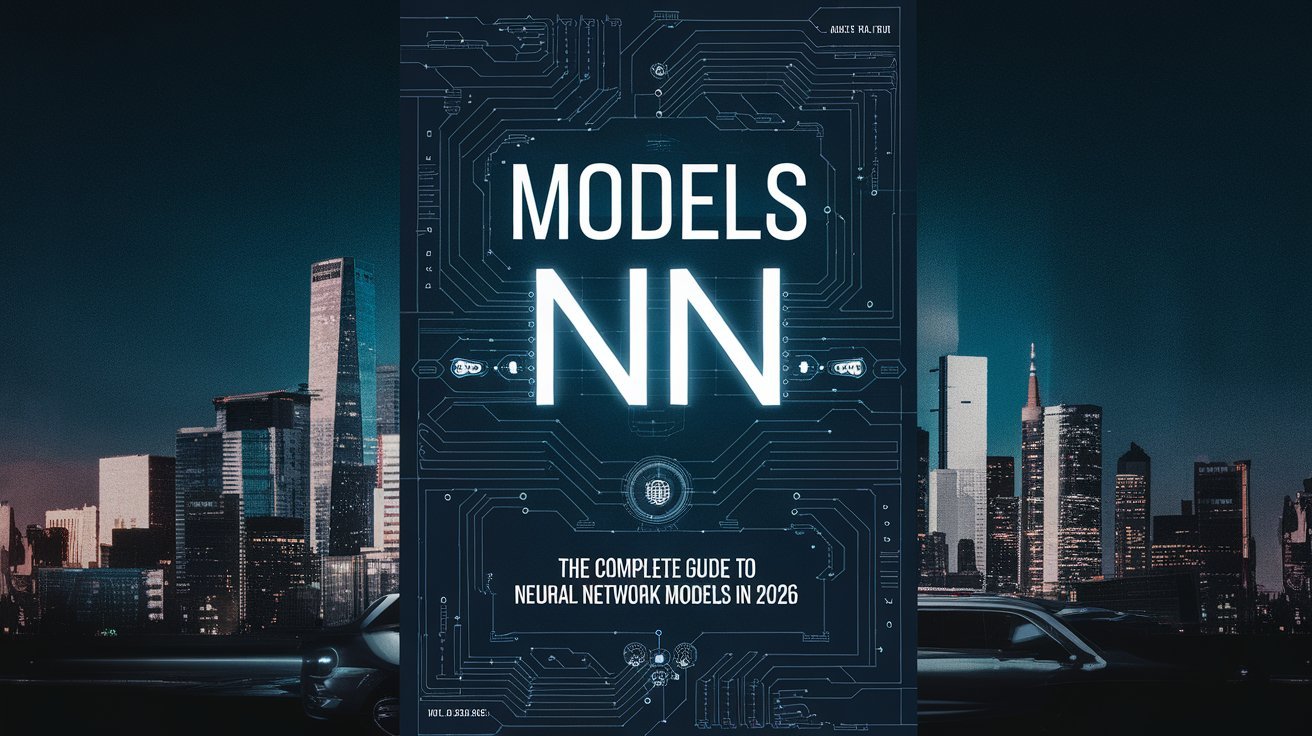
Artificial intelligence has transformed nearly every industry, and one of the biggest reasons behind this revolution is the development of Models NN, commonly known as Neural Network Models. These advanced computational systems are inspired by the structure and functioning of the human brain, allowing computers to recognize patterns, learn from data, and make intelligent decisions with minimal human intervention. Whether you’re using a voice assistant, translating languages, receiving movie recommendations, or driving a smart vehicle, neural network models are likely working behind the scenes.
As businesses increasingly adopt AI technologies, understanding models NN has become essential for developers, students, business leaders, and technology enthusiasts alike. Modern neural networks power image recognition, speech processing, fraud detection, medical diagnosis, autonomous vehicles, financial forecasting, and countless other applications. This comprehensive guide explains what models NN are, how they work, the different types available, their advantages and limitations, practical applications, and what the future holds for this rapidly evolving technology.
What Are Models NN?
Models NN refers to Neural Network Models, a family of machine learning algorithms designed to recognize patterns by processing information through interconnected layers of artificial neurons. These artificial neurons simulate the behavior of biological neurons, allowing machines to analyze complex relationships within data. Unlike traditional rule-based software that follows explicit instructions, neural networks learn automatically by analyzing examples and adjusting their internal parameters over time.
The learning process begins by feeding data into the network. Each neuron processes incoming information, applies mathematical calculations, and passes the results to subsequent layers. During training, the network compares its predictions with the correct answers and adjusts its weights using optimization algorithms such as gradient descent and backpropagation. Repeating this process across thousands or millions of examples enables the model to improve its accuracy and generalize to unseen data.
Understanding the Basic Architecture of Neural Network Models
Every neural network is composed of several fundamental components that work together to process information efficiently.
Input Layer
The input layer receives raw information such as text, numbers, images, audio signals, or sensor data. Each input feature is represented as a separate neuron before the information moves through the network.
Hidden Layers
Hidden layers perform the majority of computations. They extract increasingly sophisticated features from the data, allowing the network to detect meaningful patterns. Modern deep learning models may contain dozens or even hundreds of hidden layers.
Output Layer
The output layer generates the final prediction or decision. Depending on the task, the output may represent a class label, numerical value, translated sentence, generated image, or another form of prediction.
How Models NN Learn
Neural networks learn through an iterative optimization process. Initially, predictions are largely random because the model starts with randomly assigned weights. After each prediction, the model measures its error using a loss function. The backpropagation algorithm calculates how much each connection contributed to the error, and optimization methods update the weights to reduce future mistakes. This cycle repeats across many training iterations until the network reaches satisfactory performance.
Large datasets, powerful computing hardware such as GPUs, and efficient optimization algorithms have enabled today’s neural networks to achieve remarkable performance across diverse tasks.
Types of Models NN
Feedforward Neural Networks (FNN)
Feedforward networks are the simplest neural networks. Information moves in only one direction—from input to output. These models are commonly used for structured datasets, regression problems, and classification tasks.
Convolutional Neural Networks (CNN)
CNNs specialize in image-related tasks. Their convolutional layers automatically identify visual features such as edges, textures, shapes, and objects. CNNs are widely used in facial recognition, medical imaging, autonomous driving, and manufacturing quality control.
Recurrent Neural Networks (RNN)
RNNs process sequential information by maintaining a memory of previous inputs. They have traditionally been used for speech recognition, handwriting analysis, and language modeling.
Long Short-Term Memory Networks (LSTM)
LSTM models solve many limitations of traditional RNNs by retaining long-term dependencies within sequential data. They remain useful in forecasting, natural language processing, and time-series analysis.
Transformer Models
Transformers have revolutionized artificial intelligence by enabling efficient parallel processing of sequences using attention mechanisms. Many state-of-the-art language models rely on transformer architectures for text generation, translation, summarization, and question answering.
Graph Neural Networks (GNN)
Graph Neural Networks analyze data represented as nodes and connections. They are increasingly used in recommendation systems, fraud detection, social network analysis, molecular research, and logistics optimization.
Applications of Models NN
Neural network models have become indispensable across numerous industries.
Healthcare organizations use neural networks to analyze medical images, assist in disease diagnosis, predict patient outcomes, discover new drugs, and personalize treatment plans. Financial institutions rely on AI models for fraud detection, credit risk assessment, algorithmic trading, and customer analytics. Retail companies leverage recommendation systems to personalize shopping experiences, optimize inventory management, and forecast demand.
Transportation companies integrate neural networks into autonomous vehicles, route optimization systems, and predictive maintenance solutions. Manufacturers employ AI-powered inspection systems to identify product defects with exceptional accuracy. Educational platforms use adaptive learning algorithms to personalize lessons based on student performance, while entertainment companies recommend music, movies, books, and games using sophisticated neural networks.
Advantages of Models NN
Neural network models provide several significant benefits:
- Exceptional accuracy for complex tasks
- Ability to learn automatically from data
- Scalability for massive datasets
- Strong pattern recognition capabilities
- Continuous improvement with additional training
- Flexibility across numerous industries
- Automation of repetitive decision-making processes
- Support for image, text, speech, video, and numerical data
Limitations of Models NN
Despite their impressive capabilities, neural networks also present several challenges.
Training advanced models often requires enormous datasets, significant computational resources, and specialized hardware. Many deep learning models function as “black boxes,” making it difficult to explain exactly how decisions are reached. Overfitting can occur when models memorize training data instead of learning general patterns, while biased training datasets may produce unfair or inaccurate predictions. Additionally, developing and maintaining sophisticated neural networks requires skilled professionals and ongoing optimization.
Best Practices for Building Effective Models NN
Organizations seeking successful AI implementations should focus on collecting high-quality datasets, selecting architectures appropriate for their problems, monitoring model performance continuously, preventing overfitting through regularization techniques, validating results on unseen datasets, and retraining models as new information becomes available. Ethical AI practices, transparency, privacy protection, and bias mitigation should also remain central throughout development.
Future of Models NN
The future of neural network models is remarkably promising. Researchers continue developing more efficient architectures that require fewer computational resources while achieving higher accuracy. Emerging innovations such as multimodal AI, self-supervised learning, federated learning, explainable AI, and neuromorphic computing are expected to make neural networks more accessible, transparent, and powerful. As industries continue embracing automation and intelligent decision-making, models NN will remain at the forefront of technological innovation.
Conclusion
Models NN, or Neural Network Models, represent one of the most transformative technologies in modern artificial intelligence. Their ability to learn from data, recognize complex patterns, and solve challenging problems has revolutionized healthcare, finance, manufacturing, transportation, education, and countless other industries. While these models require significant computational resources and careful design, their benefits continue to outweigh the challenges for many real-world applications. As AI research progresses, neural network models will become even more capable, efficient, and integrated into everyday life, making them an essential area of knowledge for anyone interested in the future of technology.
Frequently Asked Questions (FAQ)
What does Models NN mean?
Models NN generally refers to Neural Network Models, which are machine learning systems inspired by the human brain that learn patterns from data.
Why are neural network models important?
They power many modern AI applications, including image recognition, language translation, recommendation systems, medical diagnosis, and autonomous vehicles.
What is the difference between machine learning and neural networks?
Machine learning is a broad field of AI, while neural networks are a specific class of machine learning algorithms designed to model complex patterns.
Which neural network model is best?
There is no single best model. CNNs excel at image tasks, Transformers dominate natural language processing, LSTMs are effective for some sequential data, and GNNs are suited for graph-structured information.
Are Models NN difficult to learn?
The fundamentals are approachable with basic mathematics and programming knowledge, but mastering advanced architectures and optimization techniques requires continued study and practical experience.
What programming language is commonly used for neural network models?
Python is the most widely used language because of its extensive AI ecosystem, including libraries such as TensorFlow, PyTorch, and Keras.
Can neural network models replace humans?
Neural networks can automate many repetitive or data-intensive tasks, but they complement rather than fully replace human judgment in areas requiring creativity, ethics, and complex decision-making.

The MP3 format has remained one of the most recognizable digital audio formats for decades. Whether people are listening to music on smartphones, downloading podcasts, creating educational content, or sharing audio recordings, MP3 files continue to provide an excellent balance between sound quality and file size. The keyword “mp3 y” often appears in online searches from users looking for information about MP3 files, audio conversion, playback, and digital music.
Despite the rise of streaming services and newer audio codecs, MP3 is still supported by nearly every device, operating system, media player, and editing application. Its compatibility, portability, and efficient compression make it an ideal solution for millions of users around the world. In this guide, you’ll learn everything about MP3 technology, how it works, its advantages, limitations, common applications, and why it remains relevant in 2026.
What Is MP3 Y?
The term MP3 Y generally refers to searches related to MP3 files or MP3 technology. MP3 itself is a digital audio compression format designed to reduce the size of audio files while preserving acceptable sound quality. The format became widely popular because it made storing and transferring music much easier compared to uncompressed audio formats.
MP3 uses perceptual audio coding, which removes sounds that are less noticeable to the human ear. This process dramatically decreases file size while maintaining an enjoyable listening experience. Because of this efficient compression, users can store thousands of songs on devices without requiring massive amounts of storage.
The History of MP3
The MP3 format was developed during the late 1980s and early 1990s by researchers working on digital audio compression. As internet speeds increased and personal computers became more common, MP3 quickly became the preferred format for sharing and storing music. It revolutionized the music industry by enabling portable music players, digital libraries, and eventually online streaming platforms.
Over the years, MP3 has remained relevant because of its universal compatibility. Even though newer codecs offer higher efficiency, MP3 continues to be supported by virtually every audio device.
How MP3 Compression Works
Unlike uncompressed audio formats, MP3 reduces file size through lossy compression. This means that certain audio information is removed to save storage space. The compression algorithm is designed to eliminate sounds that most listeners are unlikely to notice, making the reduction in quality minimal for everyday listening.
The result is a file that is significantly smaller than the original while still delivering good audio quality. Bitrate plays an important role in determining the balance between quality and file size. Higher bitrates generally produce better sound but also create larger files.
Advantages of MP3 Files
One of the biggest reasons MP3 has remained popular is its versatility. MP3 files are supported across computers, smartphones, tablets, smart TVs, gaming consoles, car entertainment systems, and portable media players. This universal compatibility allows users to access their audio content almost anywhere.
Another major advantage is storage efficiency. Compared with uncompressed audio formats, MP3 files occupy far less disk space. This makes them easier to download, upload, email, and archive.
MP3 also offers flexibility for podcasts, audiobooks, educational recordings, presentations, and voice notes. Its combination of acceptable quality and compact size makes it suitable for both personal and professional applications.
Common Uses of MP3 in 2026
Although streaming dominates music consumption, MP3 files continue to serve many important purposes. Independent musicians often distribute sample tracks in MP3 format because nearly every listener can play them without compatibility issues. Podcasters also publish MP3 episodes to ensure they work across multiple podcast apps and devices.
Educational institutions frequently provide lectures in MP3 format, allowing students to listen offline. Businesses use MP3 recordings for training materials, announcements, and presentations. Content creators rely on MP3 for sharing voiceovers and downloadable resources.
MP3 vs Other Audio Formats
Many audio formats exist today, including WAV, AAC, FLAC, and OGG. Each format offers different advantages depending on the intended use.
WAV provides uncompressed audio with excellent quality but requires significantly more storage. FLAC offers lossless compression, preserving all audio information while reducing file size, making it popular among audiophiles. AAC generally achieves better efficiency than MP3 at lower bitrates and is widely used by streaming services. OGG provides open-source compression with good quality but has less universal compatibility than MP3.
MP3 remains the best choice for users who prioritize compatibility and reasonable file sizes.
Choosing the Right MP3 Bitrate
The bitrate determines the amount of data stored each second of audio. Lower bitrates create smaller files but reduce sound quality, while higher bitrates preserve more detail at the cost of larger file sizes.
For voice recordings, lower bitrates may be sufficient. Music listeners often prefer higher bitrates because they provide a richer listening experience. Selecting the appropriate bitrate depends on storage capacity, internet bandwidth, and listening preferences.
Best Practices for Managing MP3 Files
Organizing MP3 files with descriptive filenames and accurate metadata helps users locate music and recordings quickly. Album information, artist names, genres, and cover artwork improve library management across media players.
Regular backups ensure valuable recordings remain protected from accidental deletion or hardware failure. Cloud storage and external drives are common solutions for preserving audio collections.
When creating MP3 files, use legitimate sources and respect copyright laws. If you need audio from content you own or have permission to use, many audio editing tools can export recordings to MP3.
Why MP3 Is Still Relevant
The continued popularity of MP3 comes from its simplicity and widespread support. While newer audio formats provide technical improvements, MP3 remains easy to share, easy to store, and compatible with almost every playback device. Millions of users continue to rely on it for music, podcasts, education, and business communication.
Its efficiency makes it practical for situations where storage or bandwidth is limited, ensuring that MP3 will likely remain useful for years to come.
Conclusion
The MP3 format has stood the test of time because it successfully balances audio quality, file size, and universal compatibility. Whether you’re creating podcasts, managing a music collection, distributing educational materials, or simply listening offline, MP3 continues to be one of the most practical audio formats available. Understanding how MP3 compression works, when to use it, and how it compares with other formats helps users make informed decisions about their digital audio needs. As technology evolves, MP3 remains a trusted standard that continues to serve millions of people worldwide.
Frequently Asked Questions (FAQ)
What is MP3 Y?
MP3 Y generally refers to searches related to MP3 files, the MP3 audio format, or information about digital audio technology.
What is an MP3 file?
An MP3 file is a compressed digital audio file that reduces storage requirements while maintaining good listening quality.
Why is MP3 still popular?
MP3 is popular because it is supported by almost every device, offers efficient compression, and is easy to share and store.
Is MP3 better than WAV?
WAV provides higher audio quality because it is uncompressed, while MP3 offers much smaller file sizes and greater portability.
What bitrate is best for MP3?
The ideal bitrate depends on your needs. Higher bitrates generally provide better sound quality, while lower bitrates save storage space.
Can MP3 files be used offline?
Yes. MP3 files can be stored locally on compatible devices and played without an internet connection.
Is it legal to create or convert MP3 files?
Yes, if you are converting audio that you own or have permission to use. Respect copyright laws when creating or sharing MP3 files.
Does MP3 work on all devices?
MP3 is one of the most widely supported audio formats and works on most computers, smartphones, tablets, media players, and car audio systems.

In today’s digital world, new online platforms, analytical tools, and information resources continue to emerge, offering users innovative ways to access data, improve productivity, and make informed decisions. One name that has started gaining attention is NumericGazer. Whether you’ve recently discovered the term through a search engine, social media discussion, or recommendation, you may be wondering exactly what NumericGazer is, what it offers, and whether it is worth exploring. Understanding a platform before using it is essential, especially when it promises to simplify data interpretation, provide useful insights, or help users solve complex numerical challenges.
This comprehensive guide explains everything you need to know about NumericGazer in detail. We’ll explore its purpose, features, benefits, possible applications, advantages, limitations, tips for beginners, and frequently asked questions. By the end of this article, you’ll have a complete understanding of NumericGazer and be able to determine whether it meets your needs.
What Is NumericGazer?
NumericGazer is a term associated with numerical analysis, data interpretation, or number-based digital tools, depending on its specific implementation or platform. It generally refers to a solution designed to help users understand numerical information more efficiently by presenting data in a meaningful and accessible way. Rather than manually processing large amounts of information, users can rely on NumericGazer to organize, interpret, and display data for better decision-making.
As businesses, researchers, students, marketers, and professionals continue working with increasingly large datasets, tools that simplify numerical analysis have become more valuable than ever. NumericGazer aims to bridge the gap between raw numbers and actionable insights by providing features that improve accuracy, efficiency, and usability.
Why Is NumericGazer Becoming Popular?
The popularity of NumericGazer can be attributed to the growing demand for tools that reduce the complexity of working with numbers. Modern organizations rely heavily on data to guide strategic decisions, evaluate performance, identify trends, and forecast future outcomes. Instead of spending countless hours organizing spreadsheets or manually analyzing statistics, users increasingly seek platforms that automate these processes while maintaining accuracy.
Another reason for its rising popularity is accessibility. Many modern analytical platforms focus on creating intuitive interfaces that allow beginners and experienced users alike to navigate data without requiring advanced technical knowledge. This approach makes numerical analysis more approachable and practical across different industries.
Key Features of NumericGazer
One of the strongest aspects of NumericGazer is its collection of features designed to simplify data management and analysis. Depending on the version or implementation, users may benefit from capabilities such as automated calculations, data visualization, trend identification, statistical summaries, reporting tools, and customizable dashboards. These features help users transform raw numerical information into meaningful visual insights that are easier to understand.
Another valuable feature is the ability to organize information efficiently. Instead of reviewing thousands of rows of data manually, users can filter, categorize, and summarize information quickly. This significantly improves productivity while reducing the likelihood of human error.
Many users also appreciate platforms that integrate with existing software, allowing data to flow seamlessly between different applications. Integration reduces repetitive work and creates a more streamlined workflow.
Benefits of Using NumericGazer
The benefits of NumericGazer extend beyond simple calculations. One major advantage is improved decision-making. By presenting information clearly and highlighting meaningful patterns, users can identify opportunities, detect problems early, and make informed choices based on reliable data.
Another benefit is increased efficiency. Tasks that once required hours of manual effort can often be completed within minutes using automated tools. This allows professionals to focus more on strategy and less on repetitive calculations.
Accuracy is another important benefit. Automated systems help minimize common calculation mistakes that occur during manual processing, leading to more dependable results.
Additionally, NumericGazer may improve collaboration by making reports easier to share among team members. Visual charts and organized summaries help everyone understand the same information quickly, reducing confusion and improving communication.
Who Can Use NumericGazer?
NumericGazer can potentially serve a wide range of users across different industries. Students may use it to better understand mathematical concepts or analyze research data. Businesses can leverage it for financial reporting, budgeting, forecasting, and operational analysis. Marketing professionals may use it to evaluate campaign performance through numerical metrics, while researchers can organize and interpret experimental results more efficiently.
Freelancers, entrepreneurs, educators, analysts, consultants, and project managers can also benefit from having reliable numerical analysis tools available to support daily decision-making.
How NumericGazer Works
Although the exact workflow depends on the implementation, NumericGazer generally follows a structured process. Users begin by importing or entering numerical information into the platform. The system then processes the data using built-in analytical methods, identifies meaningful relationships, performs calculations, and presents the results through charts, tables, graphs, or summary reports.
Many modern platforms also allow users to customize their dashboards, select different visualization styles, filter information, compare historical data, and generate downloadable reports. These capabilities help users interpret information more effectively while saving valuable time.
Advantages of NumericGazer
Several advantages contribute to the growing interest in NumericGazer. It simplifies complex numerical tasks, reduces manual effort, improves reporting accuracy, supports better planning, and helps users identify trends that might otherwise remain hidden. Many users also appreciate platforms that continuously improve through updates, adding new features while enhancing usability.
Scalability is another advantage. Whether analyzing small datasets or large volumes of information, platforms designed for numerical analysis can often adapt to changing user requirements without sacrificing performance.
Potential Limitations
Like any digital solution, NumericGazer may have limitations depending on the platform’s capabilities. Users should verify data accuracy, understand the assumptions behind automated calculations, and recognize that software complements rather than replaces critical thinking. Learning advanced features may also require some time, particularly for users who are new to data analysis.
Compatibility with existing workflows, subscription costs, and available support resources are additional factors worth considering before relying heavily on any analytical platform.
Tips for Getting the Most Out of NumericGazer
To maximize the value of NumericGazer, begin with clean and well-organized data. High-quality input generally produces more reliable results. Take advantage of visualization tools to better understand patterns, regularly review generated reports, and compare historical trends to identify meaningful changes over time. Learning the platform’s advanced features through documentation or tutorials can also help users unlock its full potential.
Additionally, maintain good data security practices by protecting sensitive information, using secure passwords, and following recommended privacy guidelines when sharing reports with others.
Best Practices for Using NumericGazer
Successful users typically establish clear goals before beginning any analysis. Knowing exactly what questions need answering makes it easier to select the appropriate metrics and visualizations. Consistently reviewing data quality, documenting analytical processes, and validating important findings further improve confidence in the results.
Regularly updating datasets ensures analyses remain relevant, while combining numerical insights with professional judgment leads to stronger decision-making than relying solely on automated outputs.
Conclusion
NumericGazer represents the growing importance of intelligent numerical analysis in today’s digital landscape. As individuals and organizations increasingly depend on data to make informed decisions, platforms that simplify complex calculations, improve visualization, and streamline reporting become increasingly valuable. Whether you’re a student seeking clearer insights, a business professional analyzing performance metrics, or a researcher working with extensive datasets, NumericGazer offers concepts and capabilities that can help transform raw numbers into meaningful information. Before adopting any analytical platform, evaluate its features, verify its suitability for your needs, and ensure it aligns with your long-term objectives. With thoughtful implementation and consistent use, NumericGazer can become an effective part of a data-driven workflow.
Frequently Asked Questions (FAQ)
What is NumericGazer?
NumericGazer refers to a numerical analysis or data interpretation platform designed to simplify working with numerical information and improve decision-making.
Is NumericGazer suitable for beginners?
Yes. Many modern analytical platforms prioritize user-friendly interfaces that help beginners understand data more easily while still offering advanced features for experienced users.
What are the main benefits of NumericGazer?
Its primary benefits include improved accuracy, faster analysis, better data visualization, increased productivity, and more informed decision-making.
Can businesses use NumericGazer?
Yes. Businesses can use tools like NumericGazer for reporting, budgeting, forecasting, performance analysis, and strategic planning.
Does NumericGazer support data visualization?
Many numerical analysis platforms include charts, graphs, dashboards, and visual reports that make complex information easier to understand.
Is NumericGazer useful for students?
Yes. Students can use it to analyze research data, understand numerical concepts, and organize information more effectively.
How does NumericGazer improve productivity?
By automating repetitive calculations, organizing information efficiently, and generating reports quickly, NumericGazer saves significant time compared to manual analysis.
What should I consider before using NumericGazer?
Evaluate its features, ease of use, data security practices, compatibility with your workflow, pricing (if applicable), and whether it meets your specific analytical requirements.


 Lifestyle4 months ago
Amber the Colour: Meaning, Symbolism, Psychology, Uses, and Everything You Need to Know
- Art4 months ago
Easy Doodles: The Ultimate Guide to Simple and Creative Drawing Ideas
- Lifestyle4 months ago
SEO Title Ideas for the Keyword: “obituaries daily mountain eagle”
- Business4 months ago
FeedBuzzard: The Complete Guide to Features, Benefits, and How It Works
- Entertainment4 months ago
How to Surf: The Complete Beginner’s Guide to Learning Surfing
- Education4 months ago
Classroom 30X: The Complete Guide to Features, Educational Games, Benefits, and Safe Learning
- Entertainment4 months ago
105.1 Music Playlist: Everything You Need to Know About Today’s Radio Hits
- Tech3 months ago
YouTube MP3 SS: Complete Guide to Understanding the “YouTube MP3 SS” Shortcut, How It Works, Safety Tips, and Legal Alternatives